
Welches Filament für was? Eine praxistaugliche Übersicht
PLA, PETG, ABS, ASA, PC, PA12 und die Carbon-Varianten sortiert nach Anwendung, Temperatur, Belastung und Umgebung, aus der täglichen Fertigungspraxis.
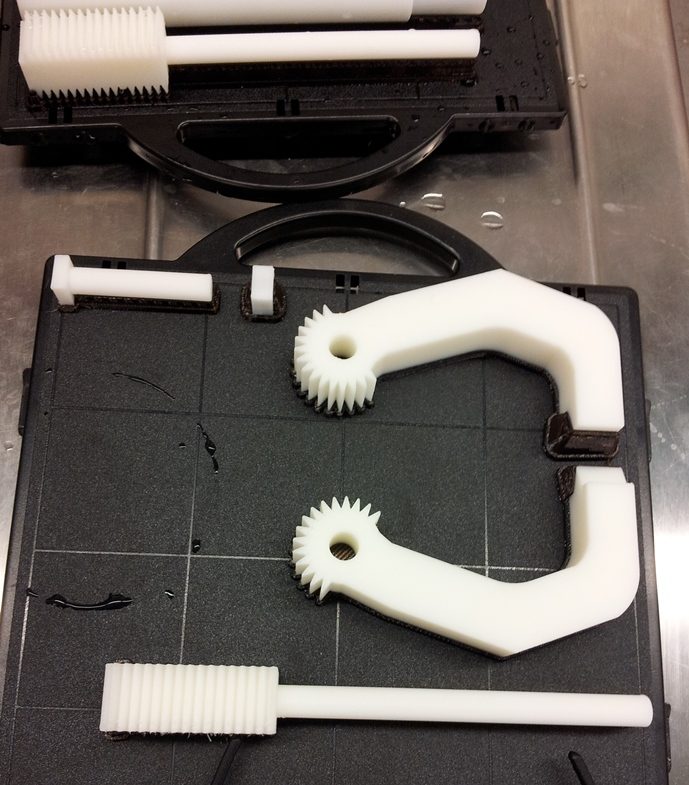
Fast alle Materialfragen, die uns erreichen, laufen im Kern auf eine Frage hinaus: Was muss das Bauteil aushalten? Temperatur, Belastung, Sonnenlicht, Chemikalien und Maßhaltigkeit entscheiden über den Werkstoff. Alles andere, auch der Preis, kommt erst danach. Eine erste Shortlist nach Ihren Einsatzbedingungen liefert auch der Material-Finder.
Mit vier Fragen anfangen
- Höchste Temperatur im Betrieb, einschließlich heißem Fahrzeuginnenraum oder Motorumfeld
- Art der Belastung: Dauerdruck, Schlag, Vibration oder praktisch keine
- Umgebung: innen, außen mit UV, Kraftstoff, Reinigungsmittel, Feuchtigkeit
- Toleranz: muss das Bauteil in ein anderes passen, oder handelt es sich um ein Anschauungsmodell
PLA: Modelle, Vorrichtungen, alles innen und kühl
PLA ist im FDM das maßlich vorhersehbarste Material und am günstigsten zu drucken. Bei Raumtemperatur bleibt es steif, ab etwa 55 bis 60 °C wird es deutlich weich. Geeignet für Form- und Passungsstudien, Montagekontrollen, Anschauungsmodelle und Werkstattvorrichtungen ohne Wärmeeintrag. Nicht geeignet im Fahrzeug, in Motornähe oder im Außenbereich.
PETG: der Standard für echte Bauteile
PETG empfehlen wir am häufigsten für funktionale Bauteile bis etwa 70 °C. Es ist zäher als PLA, splittert nicht, verträgt Feuchtigkeit und die meisten Reinigungsmittel und lässt sich auch in größeren Bauteilen prozesssicher drucken. Typische Bauteile: Gehäuse, Halter, Schutzabdeckungen, Gehäuse für die Fluidtechnik, Ersatzteile für Maschinen.
ABS und ASA: Wärme, Außeneinsatz, Automotive
Beide vertragen etwa 90 bis 100 °C und lassen sich gut dampfglätten oder sauber nachbearbeiten. ASA ist die bessere Wahl, sobald das Bauteil im Freien sitzt, weil es Farbe und Schlagzähigkeit unter UV-Einfluss behält, während ABS vergilbt und spröde wird. ABS bleibt sinnvoll für Innenbauteile, wenn der Preis wichtiger ist als die Bewitterungsbeständigkeit.
PC und PC FR: hohe Temperatur und Flammschutz
Polycarbonat behält seine strukturelle Steifigkeit deutlich über 110 °C und ist sehr schlagfest, damit ist es die richtige Wahl für Leuchtengehäuse, transparente Schutzabdeckungen und tragende Halter nahe einer Wärmequelle. PC FR mit UL94-V-0-Einstufung kommt zum Einsatz, wenn ein Elektronikgehäuse eine Brandschutzanforderung erfüllen muss.
PA12 und PA12-CF: Verschleiß, Schnappverbindungen, Chemikalien
Polyamid ist das Material für bewegte Bauteile: Zahnräder, Buchsen, Kabelführungen, Filmscharniere und Schnappverbindungen. Es widersteht Kraftstoffen und Ölen und übersteht wiederholte Verformung, bei der PETG reißen würde. Unverstärktes PA12 nimmt Feuchtigkeit auf und verändert dabei seine Maße, daher setzen wir für enge Toleranzen und hohe Steifigkeit auf das carbonverstärkte PA12-CF.
Carbon-Varianten: Steifigkeit, nicht Festigkeit
PETG-CF, PA12-CF und PLA-CF gewinnen an Steifigkeit, Maßhaltigkeit und einer matten Oberfläche. Verloren gehen dabei Schlagzähigkeit und Duktilität zwischen den Schichten. Eine CF-Variante wählt man, wenn ein Bauteil unter Last nicht nachgeben darf, nicht wenn es einen Stoß abfangen soll.
Die Kurzfassung
- Modell, Vorrichtung, innen und kühl: PLA
- Funktionsbauteil unter 70 °C: PETG
- Außeneinsatz mit UV: ASA
- Innenteil mit Wärmeeinwirkung, kostensensibel: ABS
- Über 100 °C oder transparent und zäh: PC, für UL94 V-0 PC FR
- Bewegt, verschleißend, Chemikalienkontakt: PA12, für enge Toleranzen PA12-CF
- Darf nicht nachgeben: eine CF-Variante
Wenn Sie unsicher sind, senden Sie uns das Bauteil und die Einsatzbedingungen. Wir nennen den passenden Werkstoff und begründen die Wahl, auch wenn ein günstigerer ausreicht.