
How to Choose a 3D Printing Service in Germany
What to check before you place an FDM order: materials, tolerances, batch consistency, lead times, file handling and pricing. A practical buyer checklist.
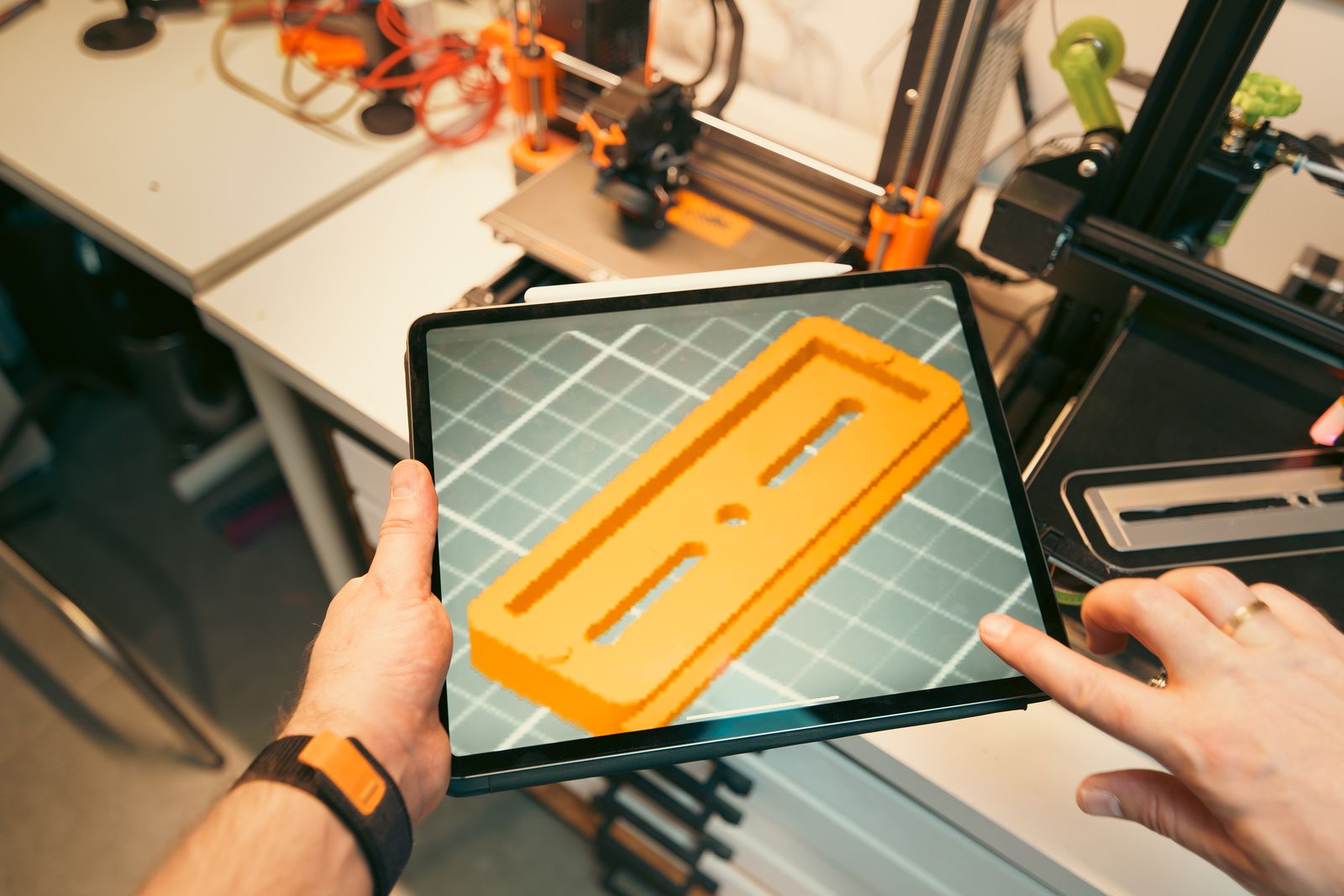
There are hundreds of shops in Germany that will print your part. The price range for the same file can easily be a factor of five, and so can the quality. The difference is rarely the printer. It is how the shop handles material, process control and communication.
This is a buyer checklist. It is the same list we would use if we were the ones ordering.
Does the material list match engineering reality?
A supplier that offers PLA, PETG and ABS is set up for visual parts. That is fine for a display model. It is not enough for a bracket that sits in an engine bay or an enclosure that has to pass a flammability requirement.
Look for reinforced and engineering grades in the list: PA12, PA12-CF, PA12-GF, PA6-CF, PPA-CF, PC, PC FR UL94, ASA. If those are available, the shop has hardened nozzles, high-temperature hot ends, enclosed and heated chambers and a drying process. Those are the things that actually decide whether your part survives.
What tolerance will they commit to in writing?
FDM is a repeatable process, but it is not a milling machine. A realistic general tolerance is around plus or minus 0.3 mm, or 0.3 percent on longer dimensions. A supplier that promises plus or minus 0.05 mm across the board either does not understand the process or is planning to machine every feature and bill you for it.
The right answer sounds like this: general tolerance is this, critical features are handled separately, and we tell you in advance which ones need post machining. That answer means someone actually reads the drawing.
How do they keep batch two identical to batch one?
This is the question most buyers forget, and it is the one that hurts later. The first ten parts are usually fine anywhere. The problem shows up on the reorder, when the profile has been changed, the filament comes from a different lot, or a different machine ran the job.
- Is the print profile locked and stored per part number?
- Is filament dried before use and stored dry between jobs?
- Are parts checked at the start, middle and end of a run, not only at the start?
- Is there a record of which machine and material lot produced your batch?
If the supplier cannot answer these, treat every order as a one-off. Do not plan a product around it.
Is the lead time a real production date?
A quoted 24 hour turnaround means nothing on its own. Ask what it applies to: is it print time, or dispatch? Does it hold for 200 parts in PA12-CF, or only for one small PLA part on an empty machine?
A supplier with real capacity planning will give you a date and tell you what would change it. A supplier without it will repeat the marketing number.
What happens to your files and your IP?
For procurement teams this is often the deciding factor. Where is the data stored, who can access it, is the shop inside the EU, and will they sign an NDA before you upload anything? A German or EU based supplier removes a lot of paperwork compared to sending geometry to a platform that reassigns the job to an unknown subcontractor.
Ask directly whether the parts are produced in house. Many quoting platforms are brokers. That is not automatically bad, but you should know who is actually printing, because that is who controls the quality.
Does the price breakdown make sense?
In FDM, machine time usually dominates the unit price, not material weight. That has a practical consequence: a part that is 20 percent lighter but takes the same time to print will not be much cheaper, while a part redesigned to print in half the time will be.
- Ask for the price at your real quantity, not at quantity one.
- Ask whether support removal and basic finishing are included.
- Ask what a design change would do to the price, since that shows whether they understand their own cost drivers.
- Be careful with prices far below the rest of the market: they usually mean thin walls, low infill and no inspection.
Will they push back on your design?
This is the clearest signal of a manufacturing partner rather than a print farm. A part with a 0.6 mm structural wall, a thread printed directly into nylon, or a clip built standing up in Z will fail in service. A supplier who prints it anyway is not doing you a favour.
Good suppliers flag it before production, propose the fix and let you decide. That single conversation is often worth more than the price difference between two quotes.
A short qualification test before you commit
Before moving a production part to a new supplier, send a small paid test order: five to ten parts of the real geometry in the real material, then reorder the same parts three weeks later. Measure both batches. If they match, you have a supplier. If they do not, you found out with ten parts instead of a thousand.
We produce FDM parts in Germany, in house, in over 20 engineering materials, from single functional prototypes to repeat batches. If you want a second opinion on a part or a comparison quote, upload the file and you will get pricing, a lead time and a material recommendation.