PA12 Carbon Fiber 3D-Druck: Wann lohnt sich der Werkstoff?
PA12-CF im FDM-Druck: Eigenschaften, Grenzen und geeignete Anwendungen. Erfahren Sie, wann die hohe Steifigkeit den zusätzlichen Fertigungsaufwand rechtfertigt.
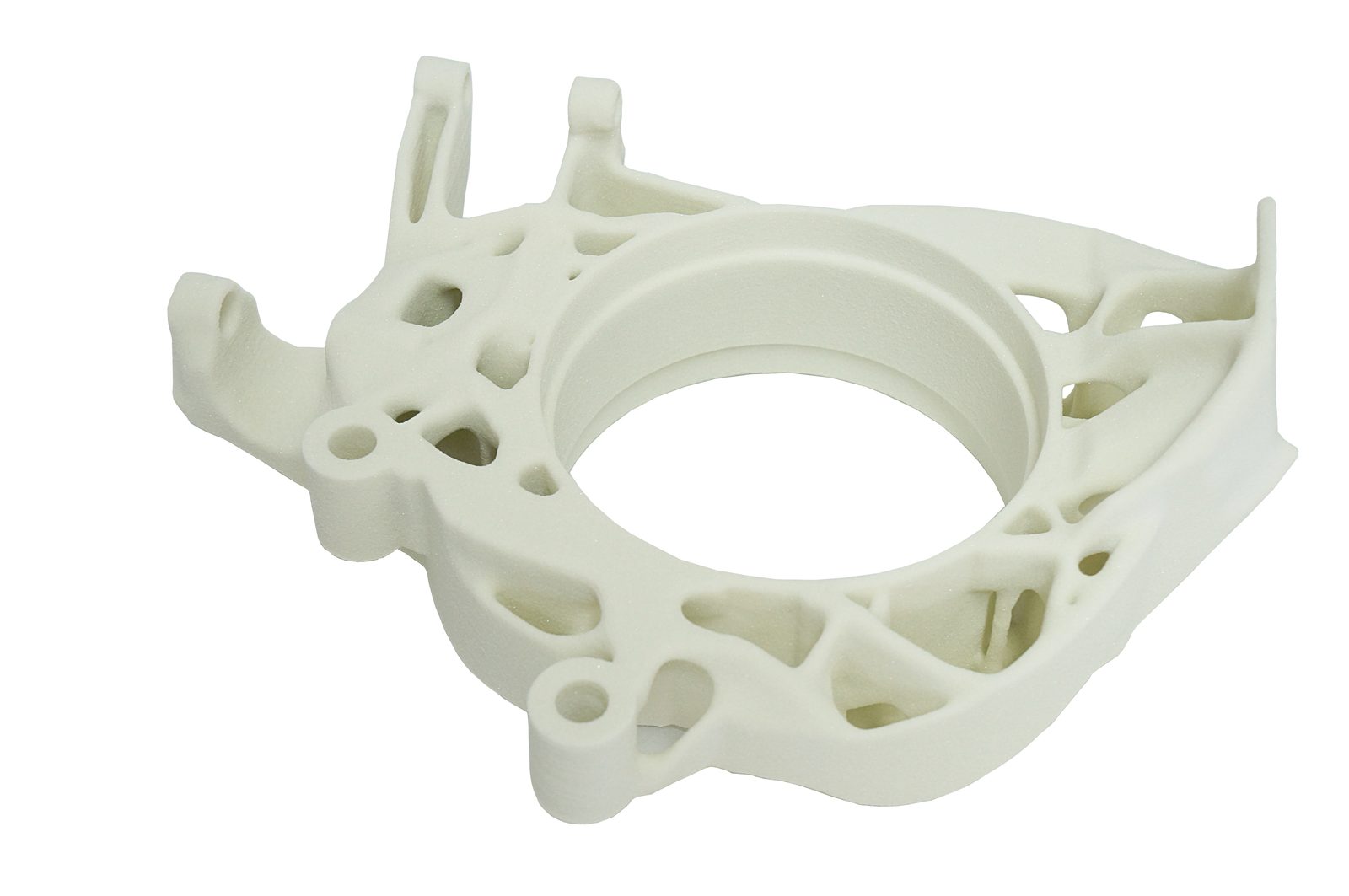
PA12-CF ist der Werkstoff, den wir am häufigsten für tragende Bauteile empfehlen. Er kombiniert Nylon 12 mit kurzen Carbonfasern und erreicht damit eine Steifigkeit nahe Aluminium bei etwa einem Drittel des Gewichts. Er kostet allerdings mehr als PLA oder PETG. Die Frage ist also, ob Ihr Bauteil das wirklich braucht, was PA12-CF bietet.
Was PA12-CF tatsächlich leistet
Die Carbonfaserverstärkung erhöht die Steifigkeit, nicht die Festigkeit. Dieser Unterschied ist wichtig. Eine PA12-CF-Halterung biegt sich unter Last weniger durch als dasselbe Bauteil aus reinem PA12. Ist die Versagensart aber Schlag oder plötzliche Überlastung, ist die carbongefüllte Variante spröder als die ungefüllte.
- Hohe Steifigkeit: geeignet für Halterungen, Vorrichtungen und Rahmen, die sich nicht durchbiegen dürfen.
- Niedriges Gewicht: etwa 1,04 g/cm3, gegenüber 2,7 bei Aluminium.
- Gute Hitzebeständigkeit: HDT von rund 150 °C, stabil unter Dauerlast.
- Geringe Feuchtigkeitsaufnahme: PA12 nimmt weniger Feuchtigkeit auf als PA6, wodurch die Maße stabil bleiben.
- Matte schwarze Oberfläche: die Carbonfaser sorgt für eine gleichmäßige Optik ohne Schichtglanz.
Wann PA12-CF die richtige Wahl ist
PA12-CF rechtfertigt seinen Preis, wenn das Bauteil ein gefrästes oder gegossenes Metallteil ersetzt: Drohnenrahmen, Robotergreifer, Montagevorrichtungen, Kamerahalterungen und Strukturteile, die an etwas Schwereres angeschraubt werden. In all diesen Fällen erlaubt die Kombination aus Steifigkeit und geringem Gewicht, Metall einzusparen, ohne Steifigkeit zu verlieren.
Es ist auch die richtige Wahl, wenn Maßbeständigkeit über Temperaturwechsel hinweg gefragt ist. Ein Bauteil in einem warmen Gehäuse oder in Motornähe profitiert von der hohen Wärmeformbeständigkeit. Reines PLA würde sich verziehen, PETG würde erweichen, aber PA12-CF behält seine Form.
Wann ein günstigerer Werkstoff die bessere Wahl ist
Trägt das Bauteil keine strukturelle Last, ist PA12-CF überdimensioniert. Ein Kabelclip, eine Kabelführung, eine Abdeckung oder ein Prototyp, der nur die Passung prüfen soll, braucht kein carbongefülltes Nylon. PETG oder PLA erledigen dieselbe Aufgabe zu geringeren Kosten.
Gleiches gilt für Bauteile, die Flexibilität benötigen. PA12-CF ist steif, genau das Gegenteil von dem, was Sie für ein Filmscharnier, eine wiederholt flexende Schnappverbindung oder eine Dichtung wollen. Hier sind TPU oder ungefülltes PA12 die bessere Wahl.
Konstruktionshinweise für PA12-CF
Carbongefüllte Nylons drucken sich anders als ungefüllte Werkstoffe. Die Faserausrichtung folgt der Druckrichtung, weshalb das Bauteil in X-Y steifer ist als in Z. Eine Halterung, die in der Druckebene belastet wird, ist steifer als eine, die quer zu den Schichten belastet wird.
Verzug ist ein geringeres Problem als bei ungefülltem PA6, tritt aber bei großen, flachen Bauteilen dennoch auf. Halten Sie Wandstärken von mindestens 1,2 mm ein, vermeiden Sie scharfe Innenkanten, und konstruieren Sie große flache Flächen mit leichter Entformungsschräge oder Entlastung, um die Spannung auf dem Druckbett zu reduzieren.
Lohnt sich PA12-CF für Ihr Bauteil?
Der kurze Test lautet: Fertigen Sie das Bauteil aktuell aus Metall, oder würden Sie es aus Metall fertigen, wenn 3D-Druck keine Option wäre? Wenn ja, ist PA12-CF wahrscheinlich der richtige Werkstoff. Ist das Bauteil nicht tragend, beginnen Sie mit PETG und steigen Sie nur um, wenn das Bauteil im Test versagt.
Wir drucken PA12-CF und 20 weitere technische Werkstoffe in Deutschland, vom Einzelteil bis zur Wiederholserie. Laden Sie Ihre Datei hoch für ein Sofortangebot und eine Werkstoffempfehlung auf Basis der tatsächlichen Lasten und Umgebungsbedingungen Ihres Bauteils.